
Students & CORE
Penn State Behrend students are an integral part of Susan Hirt Hagen CORE. As mentors, research assistants, and graduate assistants, students help us fulfill our mission while learning valuable skills, preparing them for their careers.
Why consider CORE?
Maybe you have a younger sibling you miss, or you are forward-thinking and realize career readiness starts the day you set foot on campus. Or, you are an early education major, and being a mentor makes sense.
Maybe research intrigues you, and you want to be a part of research that makes a difference.
Regardless of your reason, we are glad you are here. CORE offers mentoring and research opportunities for students in any major.
Questions? Contact us.

Students and The Mentor Project
Our formal mentoring program, The Mentor Project, has been designed for middle school-aged students. Using a multitiered approach, trained Behrend college students partner with school staff members and community volunteers to run a one-hour weekly program at schools across Erie County. These activity-based sessions focus on building connection and resilience by teaching evidence-based protective factors.
Teaching others often results in the teacher growing in unexpected ways. As mentors, college students have the opportunity to develop their own skills in:
- Time management
- Communication
- Professionalism
- Critical thinking
- Leadership

Emotional Validation
Active Listening
Emotional Awareness and Regulation
Problem-Solving and Perspective-Taking
Modeling Healthy Emotional Expression
Interested in learning more about being a mentor? Complete our no-obligation form, and a member of our team will reach out. If you decide mentoring is not a good fit after we talk, no worries. We are happy to have the conversation!
Students and Research
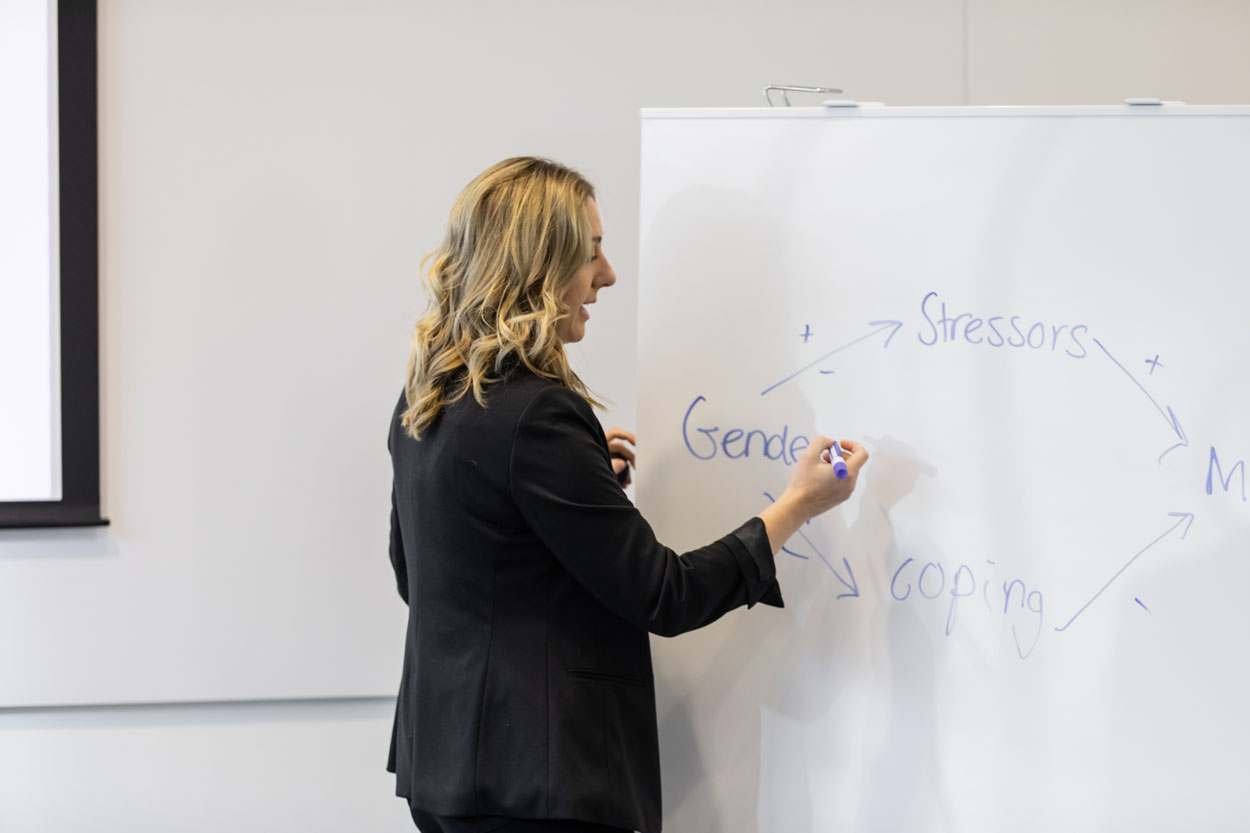
CORE can provide opportunities for students interested in research through internships, part-time positions, and graduate assistant positions. Students work alongside CORE research staff and have presented their work at Sigma XI– Penn State Behrend’s Undergraduate Research Conference.
Through working alongside our research professionals and faculty, students have the opportunity to hone skills that will follow them throughout their careers.
- Time management
- Professionalism
- Critical Thinking
- Teamwork
Learn more about CORE’s Research and Evaluation.
Interested in learning more about research opportunities at CORE? Complete our no-obligation form, and a member of our team will reach out. If you decide it is not a good fit after we talk, no worries. We are happy to have the conversation!